
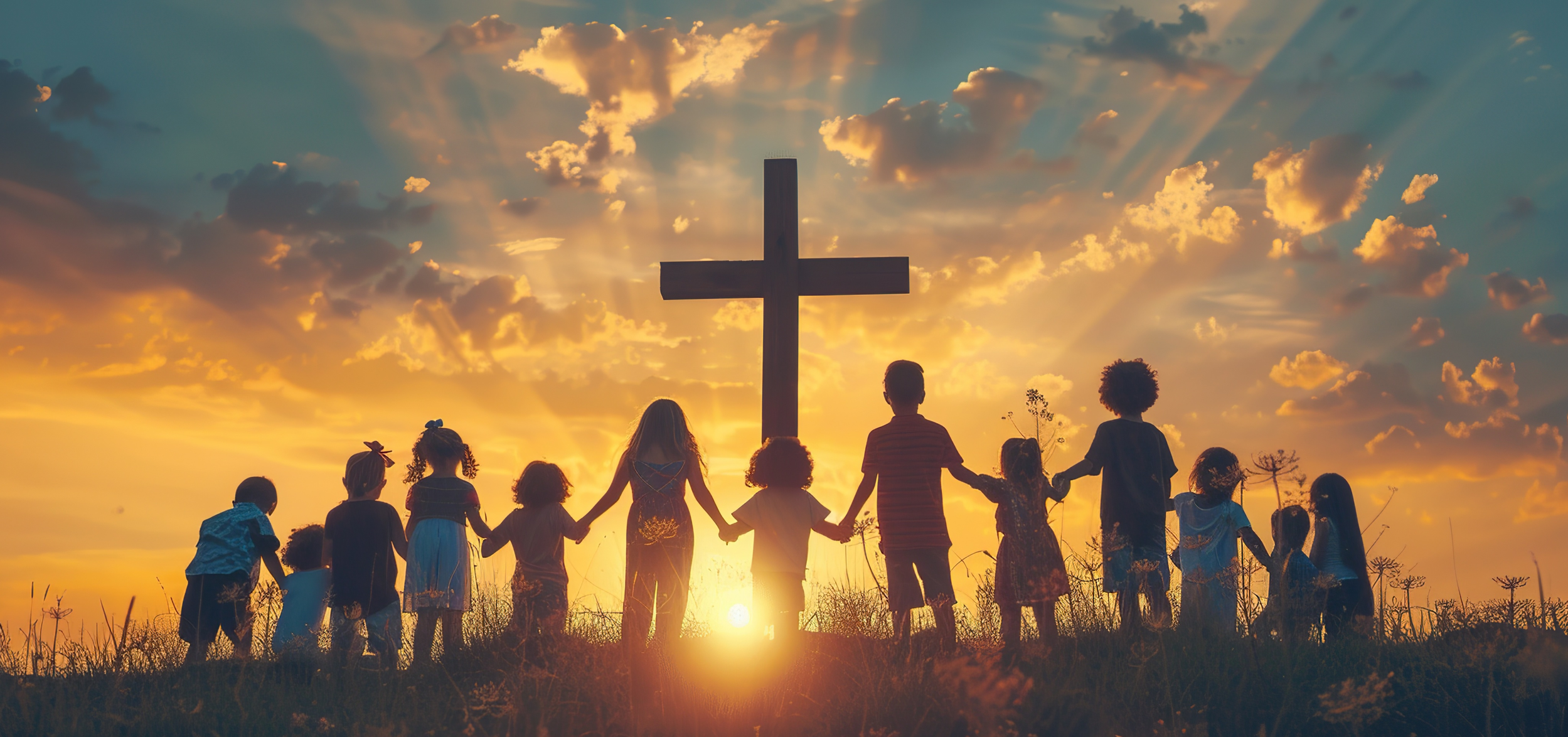
At Anchor Christian Academy, education goes beyond academics. We integrate a biblical worldview into every subject, helping students develop critical thinking skills while cultivating a love for learning and a heart for God. Our approach emphasizes academic excellence, character formation, and lifelong discipleship.
❋ Homeschool Hybrid (grace K - 3)
Anchor Christian Academy provides curated academic framework and professional resources, empowering parents to lead with confidence in both academic instruction and spiritual discipleship.
❋ Preschool (age 2 - 4)
Declaration of Intent to Homeschool
All students in grades K-5th that attend our program, must be registered as a homeschool student in the State of Georgia. A Declaration of Intent to Homeschool must be filed each school year with the State of Georgia by September 1st and a copy given to Anchor Christian Academy. The State of Georgia requires testing every three years beginning in 3rd grade. Anchor Christian Academy will provide recommendations on online parent led testing in the spring.
PRE SCHOOL FOR AGES 2 - 4
HOME SCHOOL HYBRID FOR GRADE K - 3
Three days a week
Monday
Wednesday
& Thursday
Students attend classes on Monday, Wednesday and Friday to receive appropriate grade-level instruction in math, English Language Arts, History, Science, Bible, and one extension class daily. Extension classes may change quarterly and will be taught by an extension teacher. Students will have lunchtime and recess every day.
Student School HoursSchool Office Hours8:45 am – 2:15pm
8:00 am – 3:00pm
Two days a week
Tuesday
& Friday
Students will be given assignments to complete at home on Tuesday and Thursday. Parents are responsible to teach any necessary assignments, ensuring that students comprehend what is completed at home and are prepared for the following school day.
Statement of Faith
THE BIBLE
The Bible, a core value of evangelical theology, is the standard of truth and the norm for faith. All Scripture is the inspired Word of God. Written under the inspiration of the Holy Spirit, the Bible possesses organic unity, despite variations in vocabulary, style, structure, and context across different eras. Written by men inspired by the Holy Spirit, without error, weakness, or failure, the Bible is inerrant and infallible. Therefore, it cannot be added to or subtracted from. The Holiness Church confesses the 27 books of the New Testament and the 39 books of the Old Testament as the canon of the church. Each book of the Bible possesses its own authority, yet it is united by the common theme of salvation through Jesus Christ. The Bible is the Word of God. The unity of the entire Bible is maintained by the one God, the source of its authority.
GOSPEL
The central theme of the entire Bible is the gospel (εὐαγγέλιον, euangelion). Euangelion means "good news." In the original protogospel, God promised salvation through the offspring of a woman. The offspring of the woman is Jesus Christ. Jesus Christ preached this good news of salvation and commanded his disciples to be witnesses of the gospel. The four Gospels—Matthew, Mark, Luke, and John—are the books in which the disciples recorded the good news of salvation. The core content of the gospel is the life of Jesus, represented by the cross and resurrection, and the kingdom of God he proclaimed. The life of a believer is formed solely by the gospel. The gospel is the power of God that grants salvation to all believers and is the power that firmly establishes saved believers in their faith. The Holiness Church views the gospel, the cornerstone of Christianity, as the complete gospel for the salvation of humanity from the perspective of the fourfold gospel of regeneration, sanctification, divine healing, and the second coming.
TRINITY
Although the term "Trinity" does not appear in the Bible, the entire Bible testifies to the Triune God. The Trinity is a unique conception of God that reveals the identity of Christianity. The Bible confesses not only the Father, but also the Son and the Holy Spirit as God. The Father, the Son, and the Holy Spirit are one God of the same essence, yet simultaneously exist as three persons within the Trinity.
The three persons of the Trinity mutually indwell (or interpenetrate) in holy love. The Trinity maintains this inner unity and performs its own unique work in the world. The Father creates, the Son saves, and the Holy Spirit sanctifies. the church has confessed this Triune God as the sole object of worship from the beginning.
GOD THE FATHER
The one and only Jehovah means the unique God. This unique God created the heavens and the earth, all things visible and invisible, from nothing in the beginning. God is the Almighty who rules with creative power, the Power who rules the created world with authority, and the Sovereign who governs with love.
Jesus said to his disciples, "You have one Father, the One who is in heaven" (Matthew 23:9). To Jesus, God is the Father, the only God in heaven. Jesus also taught us through prayer that God is our Father and that we are His children. We confess God as our Father, who created male and female according to their own forms.
GOD THE SON
Jesus Christ, pre-existent before creation, is the eternal Word of God. The Son of God, pre-existent from eternity, was conceived by the Holy Spirit and incarnated into this world in human flesh. Therefore, Jesus Christ possesses both complete divinity and complete humanity, making Him both true God and true man.
Jesus suffered under Pontius Pilate, was crucified, and died. This is because God sent His own Son in the likeness of sinful flesh to bear our sins. Although sinless, Jesus became a sacrifice under the curse of the law to free us from its curse. However, Jesus Christ truly rose from the dead, becoming the firstfruits of the resurrection. Furthermore, the resurrected and ascended Christ fulfills the threefold office of Prophet, Priest, and King. He will return in glory to judge the world.
GOD THE SPIRIT
The Holy Spirit is God, and in the Old Testament, He was active as the Spirit of God and the Spirit of the Lord. In the New Testament, He is called the Spirit of the Son, the Spirit of Christ, and the Spirit of Truth. The Holy Spirit, who fully descended on Pentecost, is another Comforter, who proceeds from the Father and the Son, and who receives worship and glory with them.
The Holy Spirit is the primary, life-giving Spirit, and He is a personal being who not only grieves but also possesses a will and carries out God's will. Furthermore, the Holy Spirit bestows various gifts upon believers to enable them to fulfill Christ's Great Commission, and after regeneration, He enables them to experience complete sanctification through the baptism of the Holy Spirit.
THE FALL OF HUMANITY
Humans were created in the image of God, made with righteousness and holiness, resembling God, who is love. These humans were given the freedom of will to choose. However, they ignored God's warning and ate the forbidden fruit. Eating the fruit of the tree of the knowledge of good and evil signified their rejection of God's rule and their declaration that they would live by their own will rather than by the Creator's.
As a result of sin, humanity was separated from God, and death came to all. Due to the corruption of original sin, righteousness and holiness no longer existed in humanity, and they committed personal sin in their relationship with creation. Totally depraved, every intention of humanity was evil, and they became utterly incapable of doing good.
REPENTANCE AND FAITH
Salvation occurs when we repent and believe the gospel. Sin is rebellion against God, and without repentance, we perish. There can be no salvation without forgiveness of sin. Sinners are deeply distressed by their sins and in need of forgiveness. Repentance is acknowledging our sins and confessing them before God in order to experience this holy joy.
Repentance has both divine and human elements. God's goodness leads sinners to repentance. The Holy Spirit brings evangelical repentance through the Word. This is the divine element of repentance. Human free will, restored by God's prevenient grace, leads us to repentance when God leads us to repentance. This is the human element of repentance. This repentance, as God's chastening grace, is followed by faith. Repentance is a condition of faith, and faith is the sole condition of salvation.
JUSTIFICATION
Justification is a gift of God's grace, a judicial declaration by which God declares sinners righteous. The Holy Spirit testifies that we are made righteous through Jesus Christ. Justification is not a work of human effort, for it involves the imposition of Christ's righteousness. It is received solely by God's grace through faith. God forgives the sins of those who thoroughly confess their sins. The grace of justification frees people from the guilt of sin.
Justification is received solely by God's grace through faith. God forgives the sins of those who thoroughly confess their sins. The grace of justification frees people from the guilt of sin. Justification is not about those who are already clean, but rather about God's redemptive grace that justifies the unclean.
THE CHURCH
The Church is a holy community established by the Triune God. The essence of the Church is, first, the community of God's people. Second, it is the body of Jesus Christ, the head of the Church. Third, it is an eschatological community initiated by the baptism of the Holy Spirit at Pentecost. The marks of the Church are the Word and the Eucharist.
The Church is where the true Gospel is proclaimed and the sacraments are properly administered. The Church's attributes, as defined in the Nicene-Constantinopolitan Creed, are one (ecclesia una), holy (ecclesia santa), universal (ecclesia catholica), and apostolic (ecclesia apostolica). The Church's mission is to carry out worship (leitourgia), mission (kerygma), education (Didache), fellowship (koinonia), and service (diakonia).
THE KINGDOM OF GOD
What Jesus proclaimed at the beginning of his public ministry was the Kingdom of God. The Kingdom of God is the kingdom ruled by God. This Kingdom of God has already begun with the incarnate Jesus Christ, but it has not yet been completed. The Kingdom of God will be completed after the millennial kingdom, which begins with the Second Coming of Jesus Christ. Therefore, the church participates in building the Kingdom of God through the power of the Holy Spirit, standing between the Kingdom of God, which has already begun, and the Kingdom of God, which has not yet been completed.
The Kingdom of God is coming. God has intervened specifically in human history through Jesus Christ, and the Kingdom of God, which has not yet fully arrived, is coming into human history. Ultimately, the coming Kingdom of God will be completed in the new heaven and new earth. Saints must live lives worthy of the Kingdom of God, guided by this faith and hope.